After Revolutionary Age
Malmaison, Rueil-Malmaison holds the private aftermath.
The place is not backdrop. Malmaison matters because imperial collapse arrives here as routine, furniture, silence, and the person left behind to live among them.
A house that keeps splendour visible even after protection has gone, forcing memory and abandonment to coexist inside the same domestic enclosure.
Malmaison explains why the encounter begins in stillness rather than spectacle.
It also turns the journey toward the book, because staying with Josephine now means following how love, ambition, and diminishment have inhabited the same life long before the house falls quiet.
Remain with this life
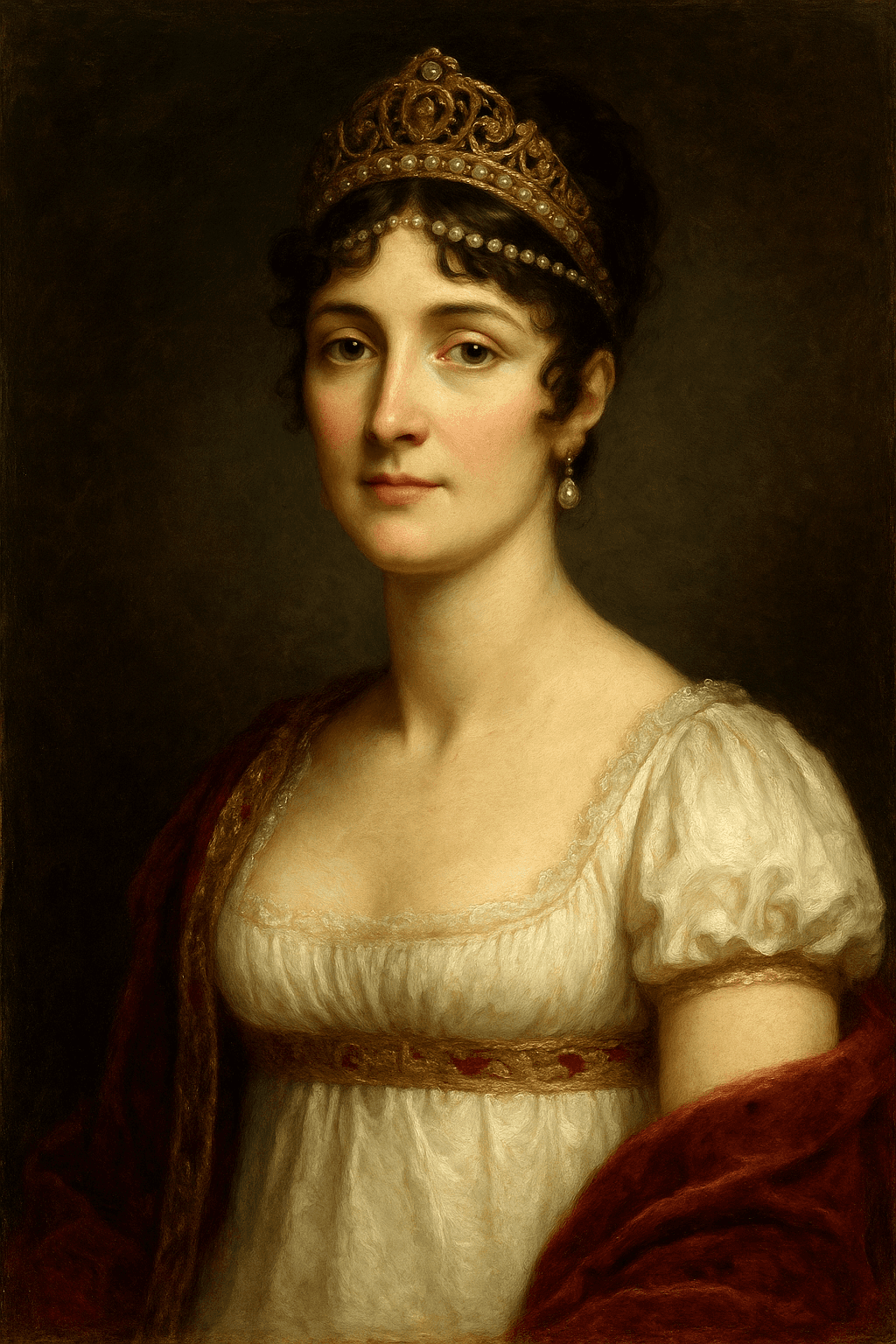
Stay with Josephine in the book.
The journey has brought you to Josephine's house, the love that changes how power is remembered, the wider age, and the room where imperial collapse becomes personal.
Empress Josephine / 1814 - Malmaison
At Malmaison, with Europe rearranging itself, an empress who was discarded sets down what Napoleon never acknowledged.
Continue
Then let the next life begin.
Membership opens the wider Meet the Past library for EUR 49/year when you want the next encounter to begin as this one closes.
Return to Josephine now that the house is clearer.
Go back to the opening room and feel more precisely how much of the pressure comes from Malmaison as well as the person inside it.
Step back to the wider age behind the house.
Malmaison matters most when the visitor can still see revolution and empire pressing through its calm.
Known
The governed Empress Josephine volume anchors her at Malmaison in 1814, and the governed place registry includes Malmaison, Rueil-Malmaison as a canonical location.
Reading
This step reads Malmaison as a place of private aftermath because the governed anchor sentence and WORLD-01 thread both place Josephine inside imperial collapse at domestic scale.