After World Wars
Passy, France holds the final reckoning.
The place is not backdrop. Passy matters because this is where a life of disciplined seeing finally has to account for what the work demanded from the body that sustained it.
A place where illness, recollection, and scientific exactness all remain close enough that the cost of discovery cannot be abstracted away.
Passy explains why the encounter begins with blood, memory, and exactness rather than with achievement.
It also turns the journey toward the book, because staying with Marie now means following how knowledge, discipline, exposure, and endurance have been living together longer than one final illness can hold.
Remain with this life
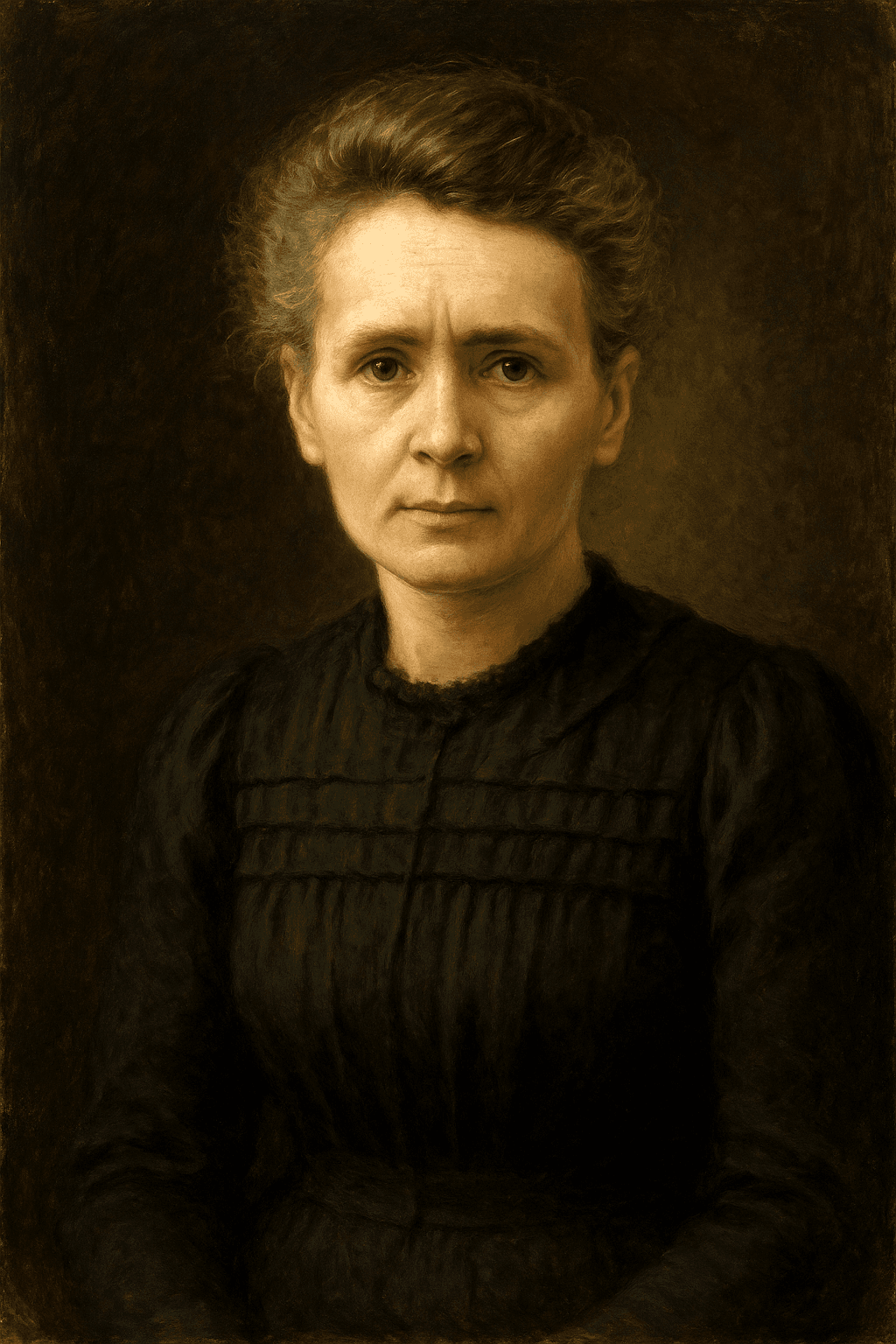
Stay with Marie in the book.
The journey has brought you to Marie Curie's final room, the earlier imagination that clarifies this endurance, the wider age, and the place where knowledge and bodily sacrifice have become inseparable.
Marie Curie / 1934 - Passy, France
In Passy, while her blood fails her, the only person to win Nobel Prizes in two sciences reflects on what discovery actually costs.
Continue
Then let the next life begin.
Membership opens the wider Meet the Past library for EUR 49/year when you want the next encounter to begin as this one closes.
Return to Marie now that the room is clearer.
Go back to the opening room and feel more precisely how much of the pressure comes from Passy as well as the person inside it.
Step back to the wider age behind the room.
Passy matters most when the visitor can still see the modern century pressing through its quiet.
Known
The governed Marie Curie volume anchors her in Passy, France in 1934, and the governed place registry includes Passy, France as a canonical location.
Reading
This step reads Passy as a place of reckoning because the governed anchor sentence already ties failing blood to the need to tell the story of radium truthfully.