After Revolutionary Age
London, England holds the unfinished argument.
The place is not backdrop. London matters because this is where conscience, maternity, intellectual labour, and mortality all have to coexist inside the same life.
A city where argument, publication, domestic vulnerability, and bodily danger all remain close enough to press on one another.
London explains why the encounter begins with a bed rather than a podium.
It also turns the journey toward the book, because staying with Mary now means following how thought, intimacy, courage, and physical danger have been living together longer than one illness can hold.
Remain with this life
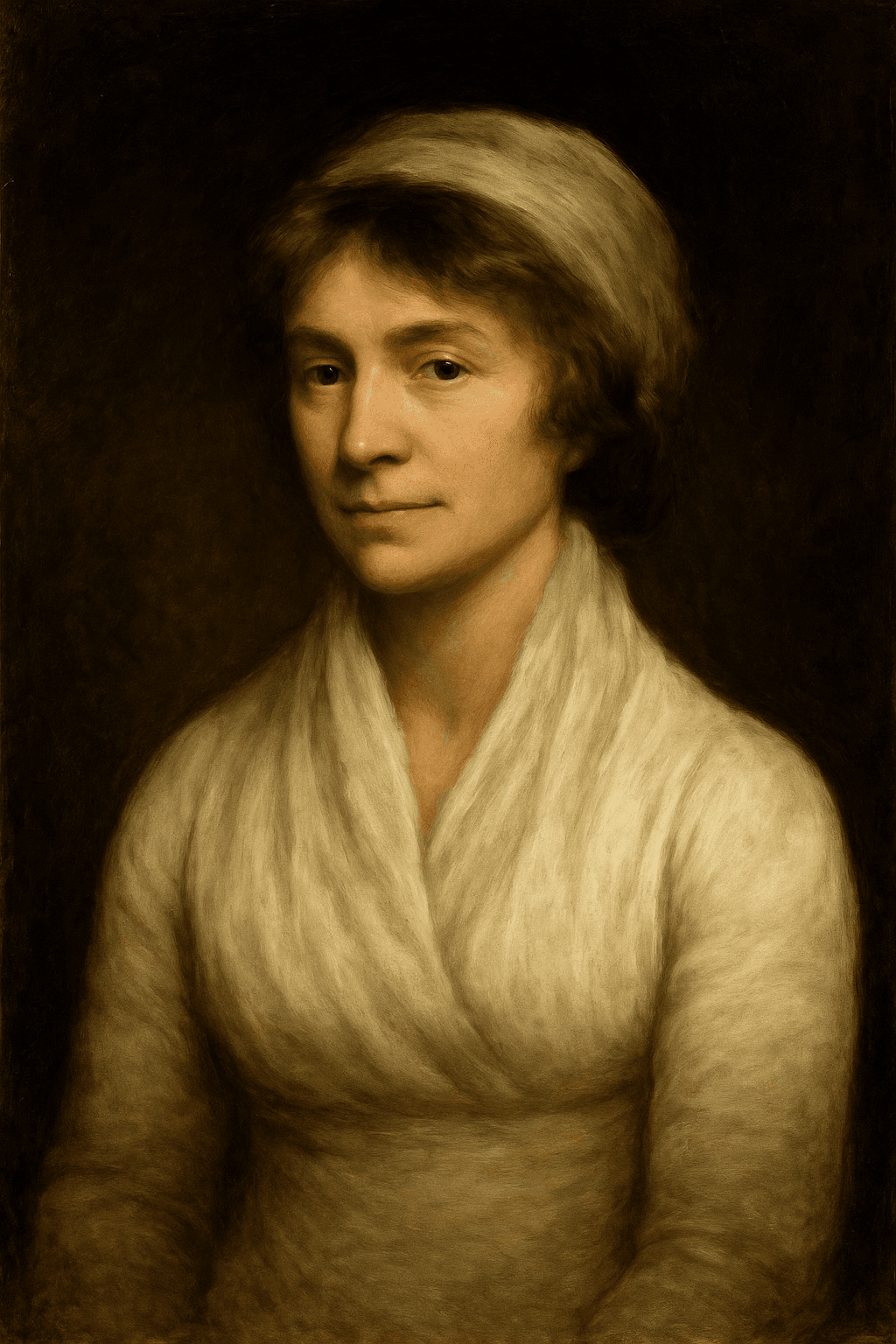
Stay with Mary in the book.
The journey has brought you to Mary Wollstonecraft's bed, the female authority that turns argument into a life-risking act, the wider age, and the city where thought must survive inside bodily danger.
Mary Wollstonecraft / 1797 - London
Weak from childbirth and aware the fever is winning, the author of the first argument for women's rights writes her last account.
Continue
Then let the next life begin.
Membership opens the wider Meet the Past library for EUR 49/year when you want the next encounter to begin as this one closes.
Return to Mary now that the city is clearer.
Go back to the opening room and feel more precisely how much of the pressure comes from London as well as the person inside it.
Step back to the wider age behind the city.
London matters most when the visitor can still see the revolutionary world pressing through its intimacy.
Known
The governed Mary Wollstonecraft volume anchors her in London in 1797, and the governed place registry includes London, England as a canonical location.
Reading
This step reads London as a place where intellect and bodily vulnerability share one enclosure because the governed anchor sentence already ties argument to fever and childbirth.