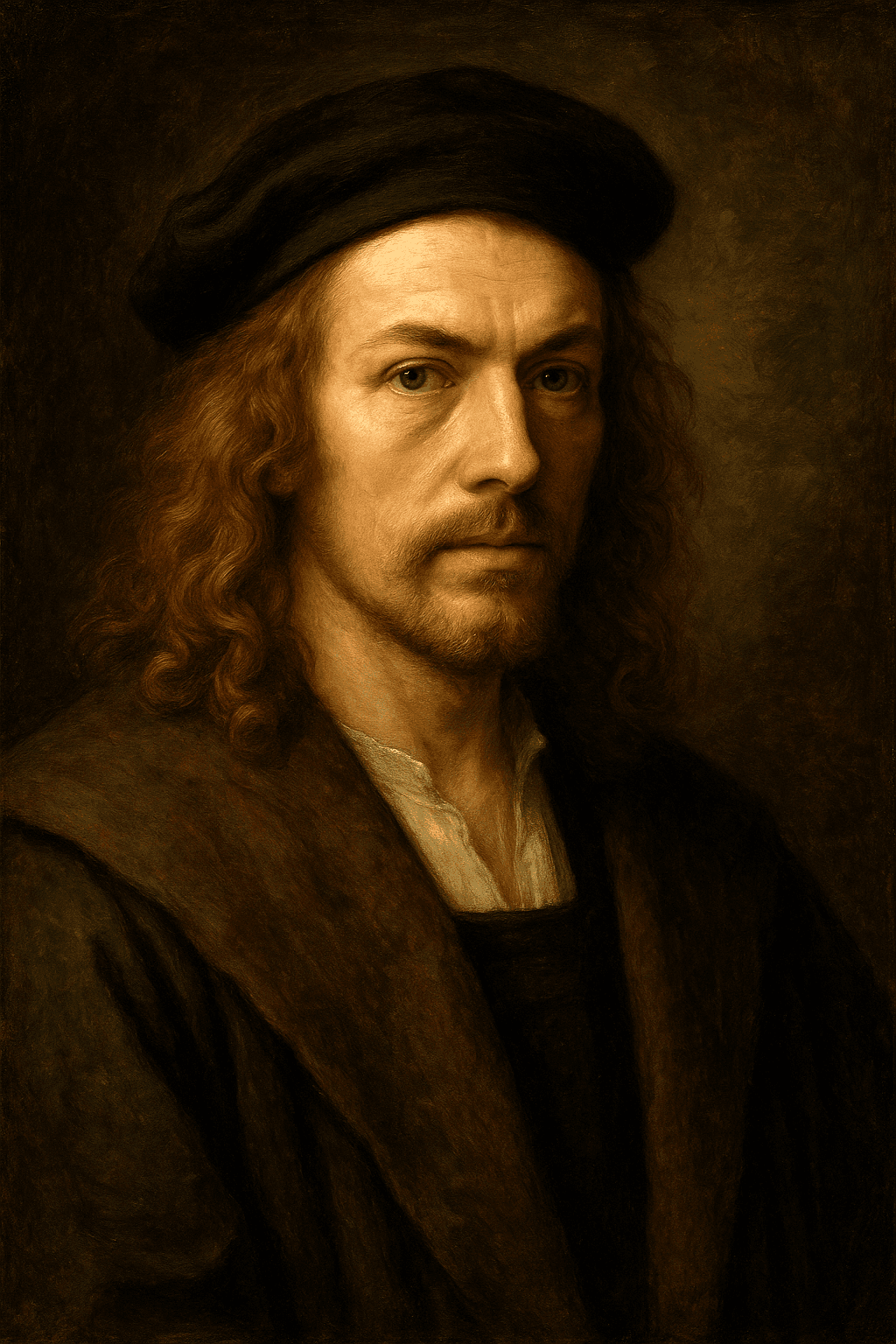
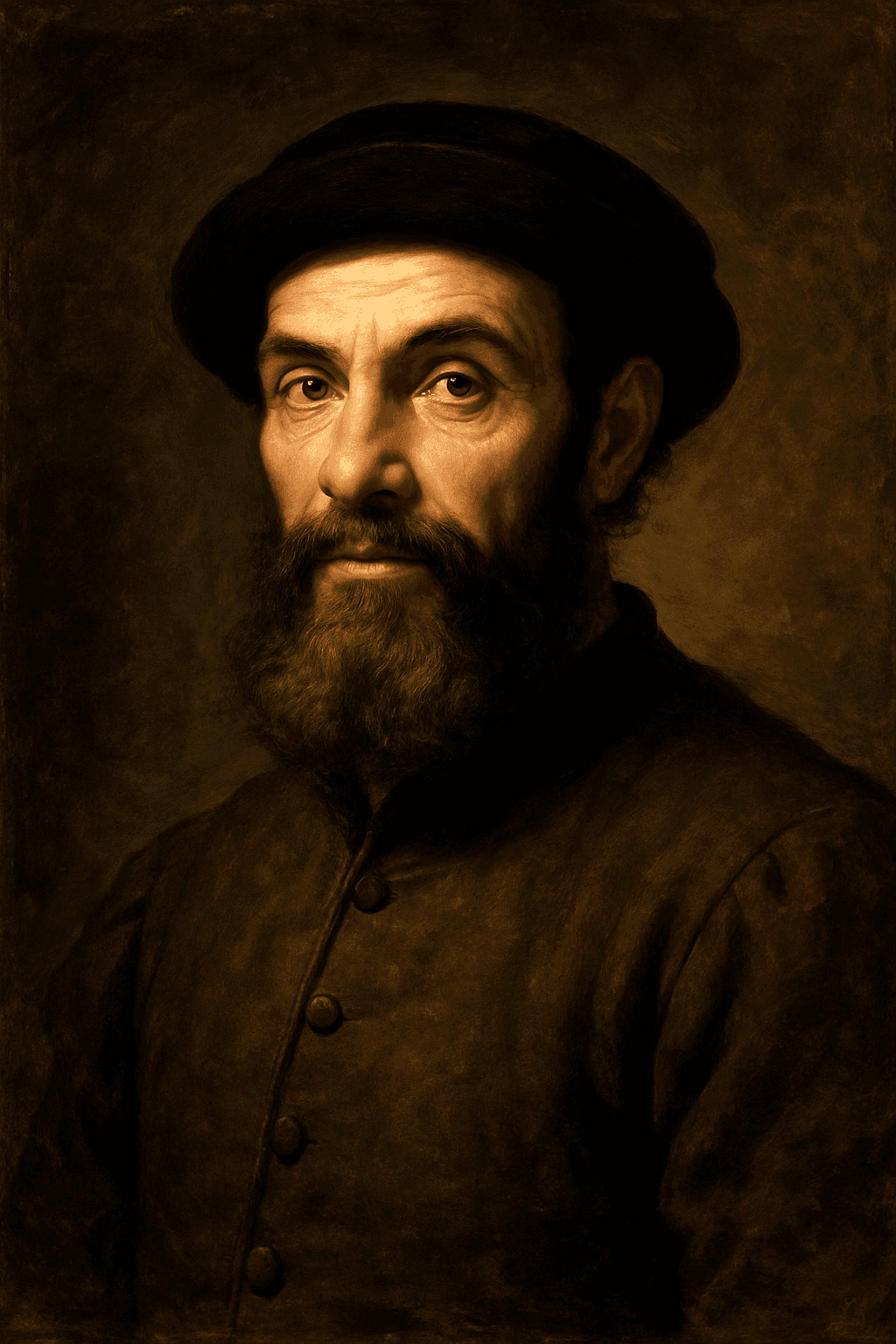
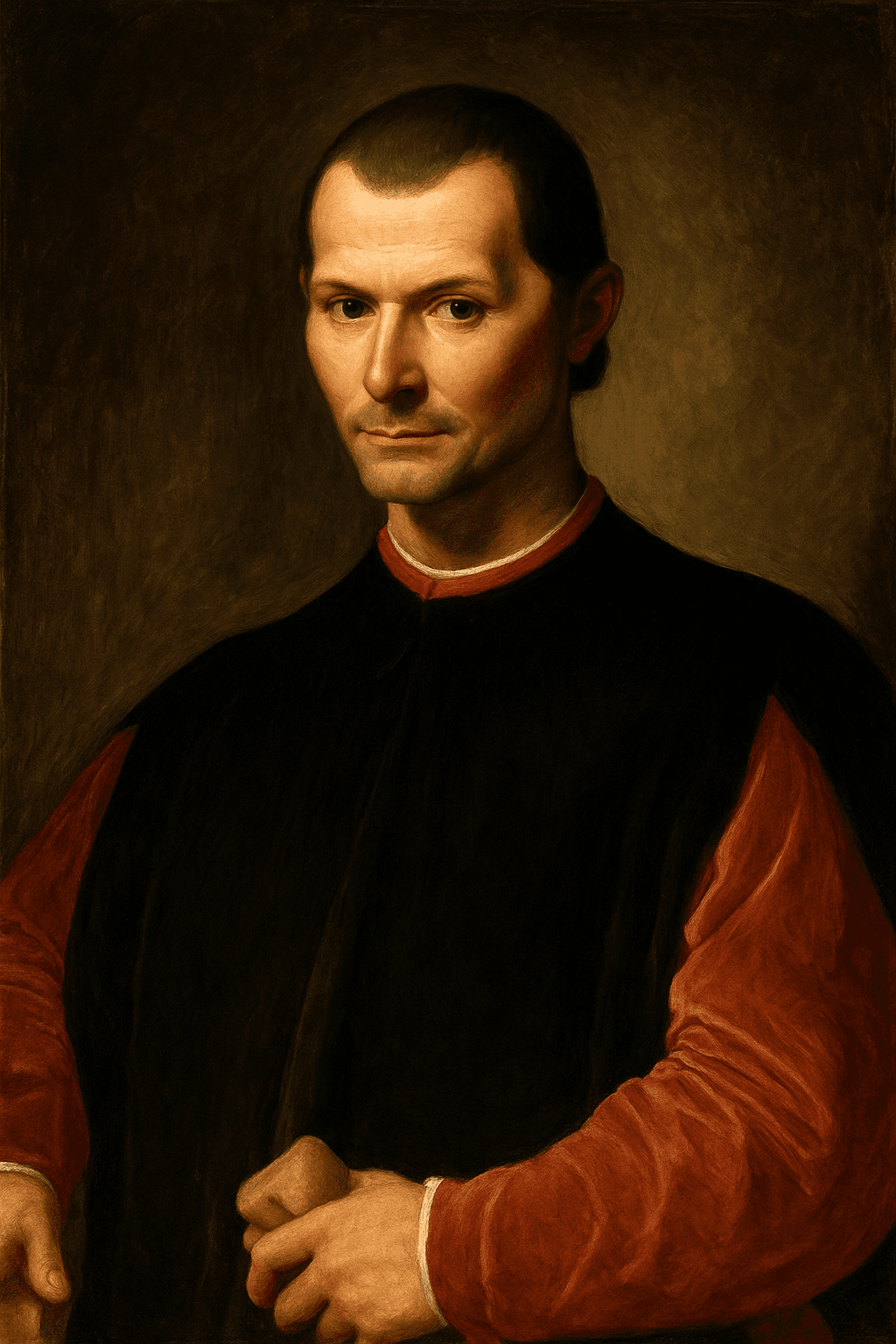
1519, Château du Clos Lucé, Amboise.
The right hand has ceased from certain offices, not from the design entire, and I begin there because it is necessary to place the matter correctly from the first line. Men see a hand that no longer answers, a pen shifted awkwardly to the left, a pile of notebooks that exceeds any practical method of ordering, and they say, with the coarse tenderness people reserve for age and visible diminishment, that much remains unfinished. They are not wrong. They are also not yet precise enough. An unfinished thing is not always an interrupted thing; often it is a thing whose visible end was never the true measure of its completion, and if I begin this account with any firmness still available to me, it is because I do not intend to let the paralysis of one arm provide others with a convenient explanation for a life that was always moving according to another geometry, one in which drawing, anatomy, fortification, water, flight, painting, memory, light, and the hidden mechanics of all bodies were not separate rooms but communicating chambers in the same structure, so that if one corridor closes the whole building does not vanish, it merely compels a different route through it.
I write with the left hand. The letters are uncertain, and from time to time the sentence grows slower than the thought and breaks where it ought, by ordinary convention, to continue. I will not conceal this. Concealment would suggest that I am interested in preserving the appearance of command more than the truth of the condition, and that has never been the useful arrangement for serious work, though I admit that in commissions and at courts I often allowed the appearance of command to stand in for something more difficult to deliver. Here, in this room at Clos Lucé, with the Loire beyond the orchard and the winter light turning every surface into a study in subtraction, appearance no longer buys enough to justify the expense. The notebooks are stacked close by, within reach if not within order. Melzi has gone through some of them this week and will go through more tomorrow. Francis came in October and again after Christmas and asked about rivers, the moon, the circulation of waters, the old question of whether the earth itself breathes through its channels and cavities as the body does through lungs and veins, and while he listened with the gravity young kings assume when they wish to show that their appetite for knowledge is not merely ornamental, I found myself thinking less about what I was telling him than about what would happen when telling ceased and the pages were left to make their own passage into other minds. That is the pressure. Not death, which is only sequence, but dissolution into fragments read by men who will think the fragments are the whole because they have never seen the structure from within.
The notebooks are not enough by themselves. They contain observations, measurements, corrections, reversals, experiments, drawings so rapid they catch the movement of thought before language has prepared its proper posture, and they contain also many beginnings of things whose assembled form I once believed I would complete when court business, bodily fatigue, travel, patronage, expense, intrigue, lawsuits, papal obstruction, festivals, engineering demands, and the persistent seduction of whatever fresh problem had just presented itself finally relaxed their claim on me. They did not relax. I am not surprised that they did not. I am surprised only by how long I persisted in treating their relaxation as an eventual certainty rather than what it was, a useful fiction by which the next enquiry justified itself against the prior unfinished one. Yet even now I am not prepared to call that fiction wholly false. If a pattern is real enough, the parts that fail to arrive at their public finish may nevertheless have entered the whole at another point. That is either a defence or a discovery. I have not determined which, and perhaps the distinction matters less than people who worship completion believe.