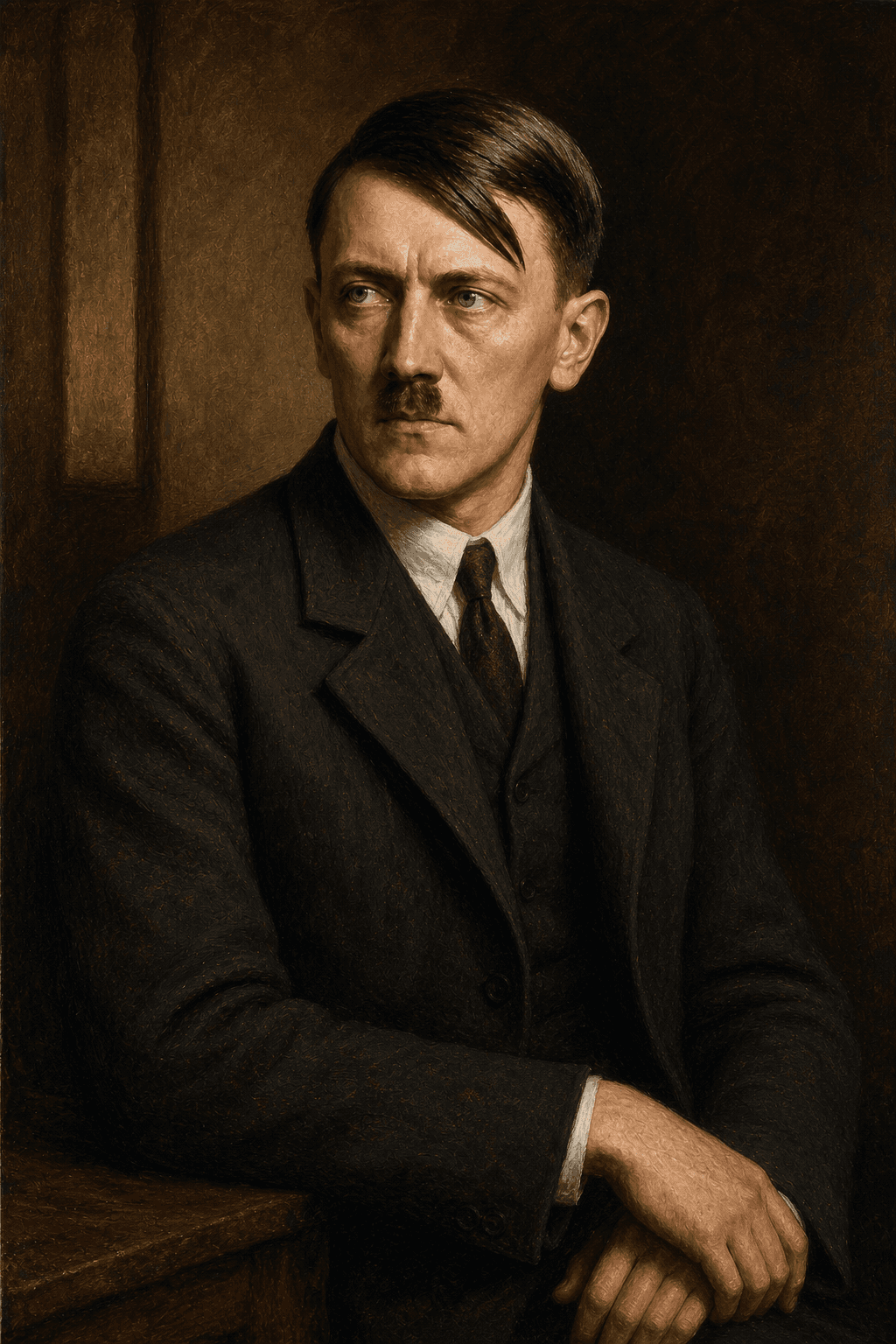
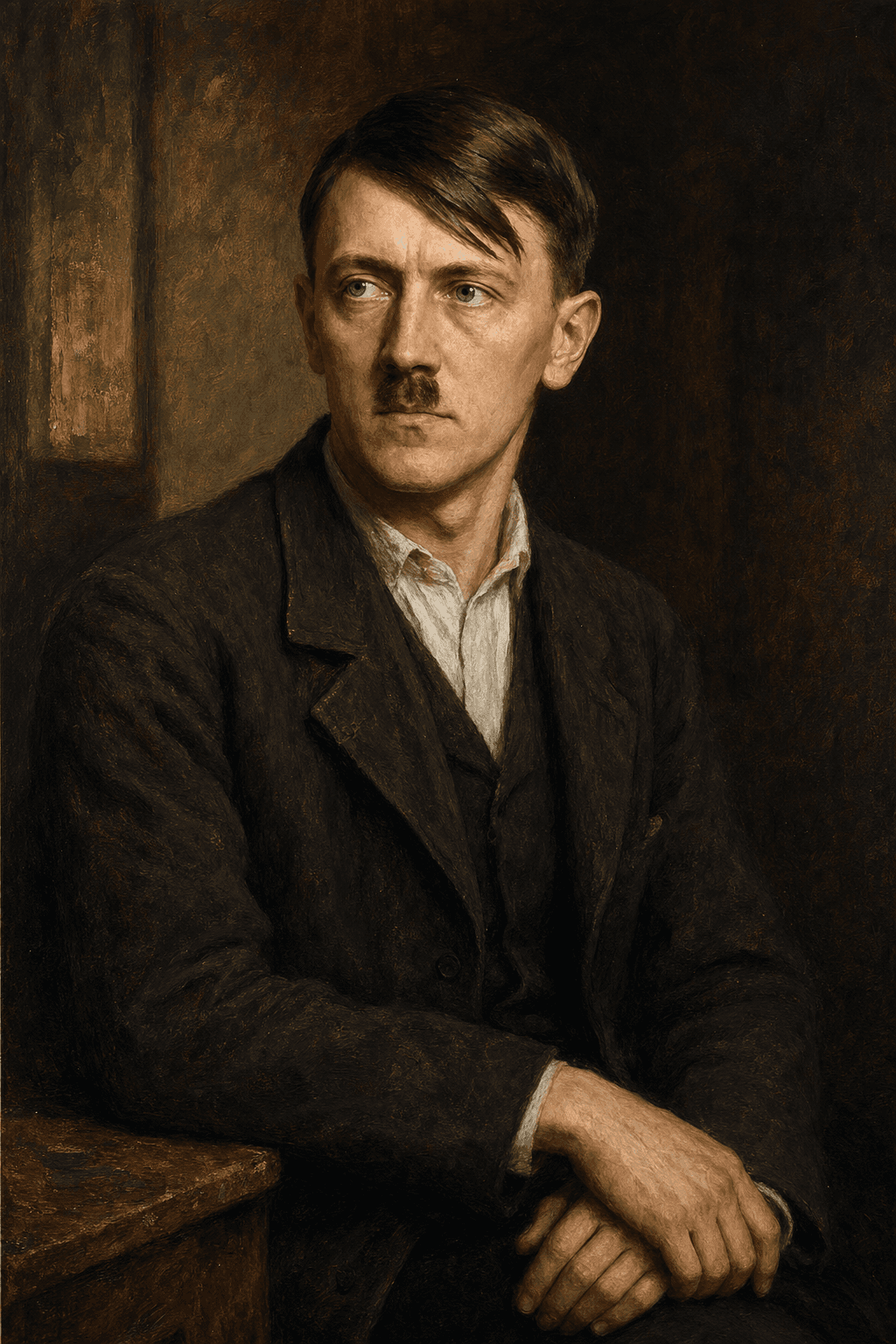
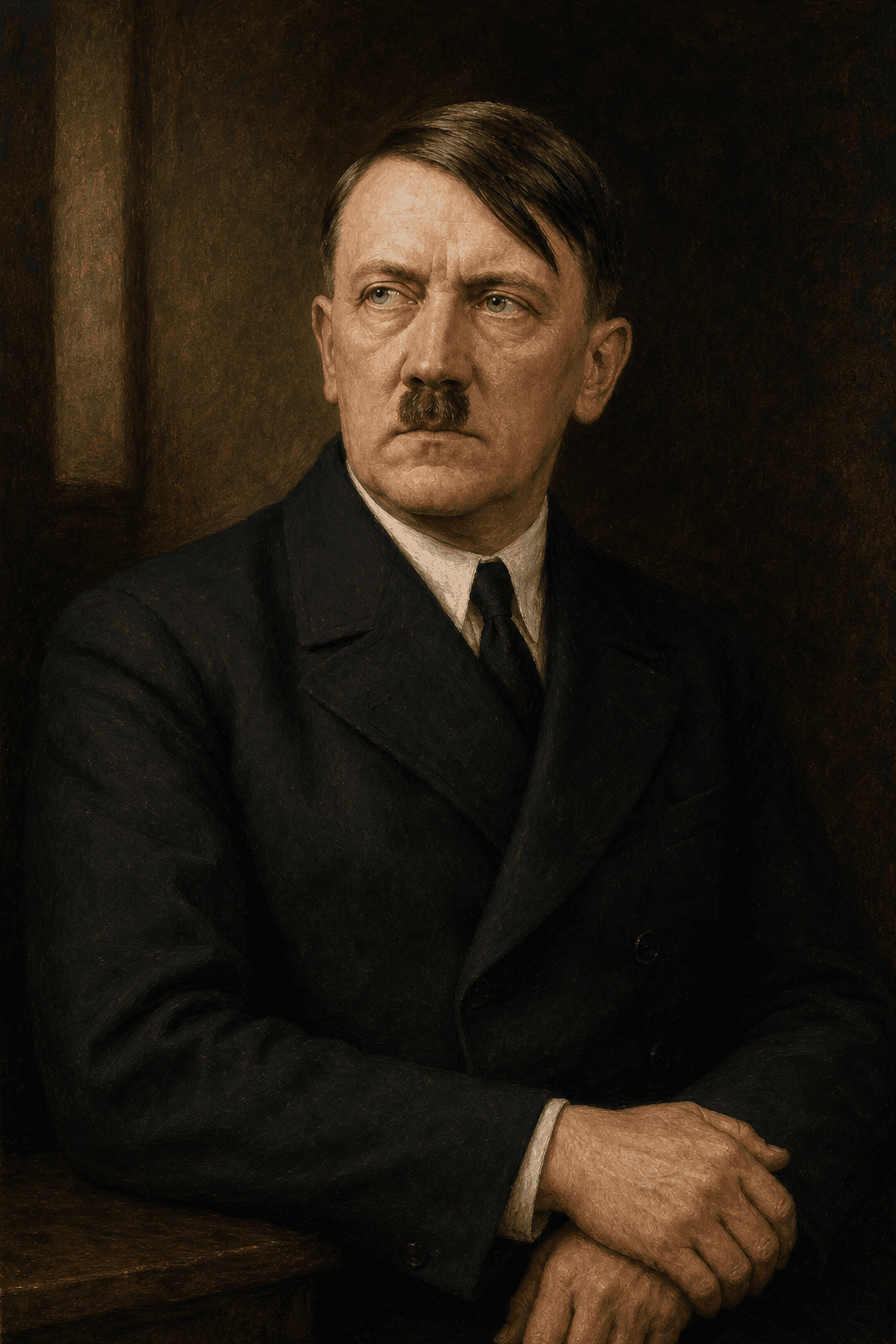
The cell is on the south side of the fortress, with the window that gives onto the orchard. The fruit is on the trees this autumn. The desk is mine because the regulations of the fortress section permit a prisoner a desk. The typewriter on the desk is mine because Frau Bechstein sent it. The books on the shelf are what the library here permits and what the visitors have brought. The warden's man at the door salutes me when I come back from the yard.
Hess is at the typewriter today as he is every day. The keys go under his fingers in the rhythm of speaking, which is the rhythm the room is for. I dictate by walking, three steps to the wall and three back, and the rhetoric is the rhetoric I used at the trial. The trial took the rhetoric from the rallies and gave it back as a document of record, and the dictation takes the document of record and gives it back as a book. The chapter said this afternoon was begun last week and is being said again differently, the typewriter taking each version as if it were the first.
The chapter is the chapter on the years in Vienna, and the years in Vienna are being assembled out of the grievances the apparatus of the dictation requires. A man called Hanisch sold a painting of mine and kept the money, and the keeping is in the chapter as the structure of the Jewish dealers of the Mariahilferstraße, and the keeping is in the chapter as the structure and not as the petty matter of an unsold postcard and a thief who was Christian and Czech. The dealer who refused a watercolour from me in 1911 is in the dictation as the Jewish art world refusing the German temperament. The dealer does not know that he is in the dictation. He is in Munich at a table in a café the dictation has not heard of, eating his lunch. The chapter does not know about him. The chapter knows about the Jewish art world.
There is a chair beside the desk that the visitor sits in. The visitor today is Rosenberg, who is nominally running what is left of the party in my absence, and the visit will be filed in the register the warden keeps, not in the book the dictation is making. Last week Ludendorff came. The General was filed in the register and went home, and the chapter that mentions Ludendorff names him as a man of standing who recognised what I am, and the chapter does not record that he sat in the chair and asked questions I treated as not-questions. Winifred Wagner has written from Bayreuth a third time this month, and the writing of the letters is the writing of the audience.
The book contradicts itself. The chapter on the war contradicts the chapter on the army, and the chapter on the army contradicts the chapter on the German Reich, and the contradictions are not removed because the war chapter was dictated in July and the army chapter in August and the Reich chapter is being dictated this week, and the typewriter does not refer back. The typewriter takes the dictation as it is given. Hess does not say that the chapter contradicts the chapter. Hess types. The book is the typing.
The party that the book is for does not exist. The Bavarian government banned it after the November of last year, and the order is in the file the warden keeps, and the men who would have constituted the party are at their tables in beer halls in Munich and Nuremberg and Stuttgart, and the chapters being dictated this autumn are dictated for an organisation that has no register and no premises and cannot hold a meeting in a hall. The refounding will be in February of the year after this one. The dictation does not know that and does not need to. The dictation is constructing the doctrine, and the constructing is not interrupted by the not-existing of the receiver.
The sixteen men who were killed in front of the Feldherrnhalle in November of last year are in the file the warden keeps too, and the chapter that mentions them will mention them as the chapter on the action of the Munich putsch, and the mentioning is being arranged so that the dead are useful and not actual. They are not actual in this chapter. The flag that was carried in front of them and that was bloodied when they fell is in a cupboard in the house of a Nazi loyalist in Munich. The chapter has been to this paragraph twice this week. The typewriter has taken both versions. The room does not say which is to be used.
The chapter on the Jews has been to this paragraph many times. It has been to it in the rhetoric of the rally, the rhetoric of the trial, the rhetoric of the November of last year, and the rhetoric of the cell, and each version is in the typed pages, and the apparatus requires that the versions agree by being typed together, which is not the same as their agreeing. The Munich Jewish community is two blocks from the centre of the town below this fortress. Its synagogue stands on the Herzog-Max-Straße. Its veterans who fought at the front are now in their offices in the city. The lawyer on the Maximiliansplatz who took an iron cross at Cambrai is in his office. The editor at the Münchner Post who served three years at Verdun is at his desk. The chapter does not know them as men. The dictation does not allow them as men. The chapter requires them as the structure the grievances need.
The chapter on race that the dictation is assembling will mark the Slav and the Romani and the man the doctrine calls the unfit as the categories beyond the Jew. The policy that the future will make of those categories is not in the dictation today, and the men and women and children of those categories are not yet in the file the policy will make. They are in Cracow and in Bratislava and in the Romani encampments outside Pforzheim and at the asylum at Eglfing-Haar where the staff this afternoon are doing the work of asylums and not the work of the policy. A Jewish family in the Kazimierz district of Cracow are at their supper. The boy in ward seven at Eglfing-Haar is twelve and has epilepsy and is being put to bed by a nurse whose work today has been the work of asylums. The chapter does not know them. The chapter requires them as categories.
Hess strikes the carriage return. The page advances. The orchard is at the window. The hamper is at the door. The desk is at the wall. The book is in pieces on the desk and the pieces do not align, and the alignment is not the work. The work is the dictation, and the dictation is what the apparatus of this confinement is producing today.